Top 10 Types of Plastic Packaging Boxes for Global Buyers
Choosing the right packaging affects product safety, shipping efficiency, brand perception, and customer trust. For global buyers, plastic packaging boxes must perform beyond a showroom sample. They should protect products during stacking, vibration, humidity, and repeated handling. Small details matter.
This guide explores ten common types, including hinged boxes, folding boxes, storage boxes, display boxes, and specialty designs. Each option offers different benefits for cosmetics, electronics, food-related products, tools, and retail goods. Buyers should compare polymer type, wall thickness, dimensions, closure strength, transparency, and printing quality. A clear box may improve product visibility, while a reinforced design may reduce damage during long-distance transport. Practical sourcing also requires checking supplier samples, production consistency, packaging tests, and documented material information. Certifications and recycling claims should be verified rather than accepted without evidence.
No box is perfect.
A lighter structure may reduce freight costs but provide less protection. A thicker box can feel premium, yet it may increase material use and shipping weight. This guide considers those trade-offs from a buyer’s perspective, using established packaging evaluation principles and realistic purchasing concerns. It also recognizes that regional recycling systems, labeling expectations, and import requirements can differ widely. Responsible buyers should confirm current requirements with qualified local professionals before placing large orders. Some recommendations may need adjustment after testing. That is normal. The best choice usually comes from balancing protection, appearance, budget, production capability, and responsible material use.

Folding Plastic Cartons and Tuck-Top Boxes
Folding plastic cartons suit buyers who need clear product visibility, compact shipping, and dependable shelf presentation. Their flat panels fold along scored lines, reducing storage volume before assembly. This matters when import schedules change unexpectedly. A carton can look perfect on screen and still crease badly during production. Material thickness, hinge design, and folding direction need physical testing.
Tuck-top boxes use an extended flap that locks into a front slot. They open quickly, close without extra tape, and support repeated handling. The locking area deserves careful attention. A weak tab may pop open in humid warehouses or crowded cartons. I recommend checking closure strength, edge sharpness, print adhesion, and drop performance with samples. Transparent PET or PP can improve visibility, while recycled content may affect clarity and stiffness.
Do not judge only by appearance. Different markets may require specific labeling, recycling marks, or food-contact documentation. Reliable suppliers should provide material declarations, test reports, and consistent dimensions across production batches. Buyers should also confirm whether the carton remains stable under cold storage, heat, and transport vibration. Small tolerances matter. A few millimeters can change how the tuck-top closes. In practice, folding speed and manual packing comfort can be overlooked, especially when designs are approved from digital drawings alone. That is where better review is still needed.
Clamshells, Blister Packs, and Thermoformed Plastic Trays
For global buyers, plastic packaging boxes are not interchangeable. Clamshells, blister packs, and thermoformed plastic trays solve different handling problems. Clamshells offer clear product visibility and strong tamper resistance. Their hinged design can simplify display and reduce separate lid components. However, poor hinge placement may cause cracking after repeated opening. A small detail matters.
Blister packs usually combine a formed plastic cavity with a paperboard backing. They work well for compact products that need organized presentation and moderate protection. Sealing temperature, cavity depth, and backing-board strength require careful testing. Thermoformed plastic trays provide shaped support for products with uneven surfaces or delicate edges. They can hold items firmly during export, reducing movement inside cartons. I have seen trays fail when corners were too sharp or the plastic was too thin. Tooling should follow the product’s actual dimensions, not a rough drawing. Buyers should request samples, drop tests, stack tests, and heat-resistance checks before approving mass production. PET, PVC, and other plastics have different clarity, stiffness, and recycling considerations. Local packaging rules also vary, so documentation should accompany every material specification. A practical weakness remains: highly customized trays may increase tooling costs and complicate later design changes. Clear measurements and honest testing records prevent expensive surprises.
Rigid Plastic Cases, Tubs, and Lidded Containers
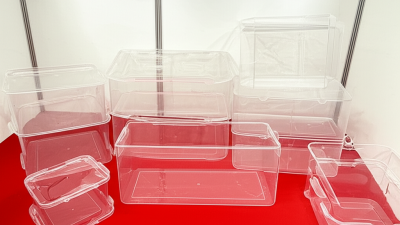
Rigid plastic cases, tubs, and lidded containers are practical choices among the top ten plastic packaging box types. They protect products from dust, impact, moisture, and rough handling. Buyers commonly select cases for tools, electronics, samples, and sensitive components. Tubs suit bulk items, powders, parts, and retail products. Lidded containers offer quick access without sacrificing basic protection.
Material choice affects performance. Polypropylene tubs are lightweight and resist many chemicals. High-density polyethylene containers handle repeated handling and moderate impact. Clear plastic cases improve product visibility, while opaque versions provide better light protection. Check wall thickness, hinge strength, lid fit, and closure force before approving a sample. Small details matter. A lid that snaps too tightly can slow packing operations.
Stackability also deserves practical testing. A container may stack neatly when empty but deform under warehouse weight. Test filled units on pallets, during transport, and after temperature changes. Rounded corners reduce cracking, yet they can waste interior space. This trade-off is easy to overlook. In packaging evaluations, I would measure usable volume rather than external dimensions alone. Buyers should also confirm recycled content options, surface finish, labeling methods, and compatibility with regional packaging requirements. No sample proves everything. A short pilot run often reveals warped lids, scratches, or uncomfortable edges before large-scale purchasing.
Material, Compliance, Cost, and Shipping Factors for Global Buyers
Top 10 Types of Plastic Packaging Boxes for Global Buyers
Material, Compliance, Cost, and Shipping Factors for Global Buyers
Global buyers can choose rigid folding boxes, hinged boxes, clamshells, sleeves, drawer boxes, thermoformed trays, blister boxes, nesting cases, snap-lock boxes, and reusable totes. Material selection affects protection, compliance, and landed cost. PET offers clarity and recycled-content potential. PP tolerates hinges and repeated handling. HDPE provides impact resistance, while ABS adds stiffness but often costs more. PVC may suit some designs, yet buyers should check restricted-substance rules and recycling routes.
The OECD’s Global Plastics Outlook reports 460 million tonnes of plastic were produced in 2019, creating 353 million tonnes of waste. Packaging represented about 40% of that waste. This changes the purchasing conversation. Request resin identification, recycled-content evidence, food-contact declarations, and migration testing when relevant. Regulation (EU) 2025/40 is reshaping European packaging expectations, but requirements still vary by destination. One certificate is not a global passport.
Cost extends beyond the unit price. Compare tooling, color, closures, inserts, inspection, and carton utilization. A lightweight PET box may reduce material spend, yet a weak hinge can increase returns. Shipping favors stackable geometry, nested parts, and compact master cartons. Measure cubic volume, not only kilograms. Attractive boxes sometimes ship half-empty. That mistake deserves reflection. Request pre-production samples, drop tests, compression tests, and packing trials before approval. The cheapest quote may become expensive after damage, relabeling, or disposal.
Top 10 Types of Plastic Packaging Boxes for Global Buyers
Material, compliance, cost, and shipping benchmark for international sourcing decisions
The benchmark uses a 1–5 scale: higher scores indicate stronger performance. Cost efficiency reflects typical production economics, shipping efficiency reflects weight and nesting potential, and compliance readiness reflects suitability for common food, retail, transport, and export requirements. Actual results vary by dimensions, resin grade, tooling, order volume, destination, and applicable regulations.