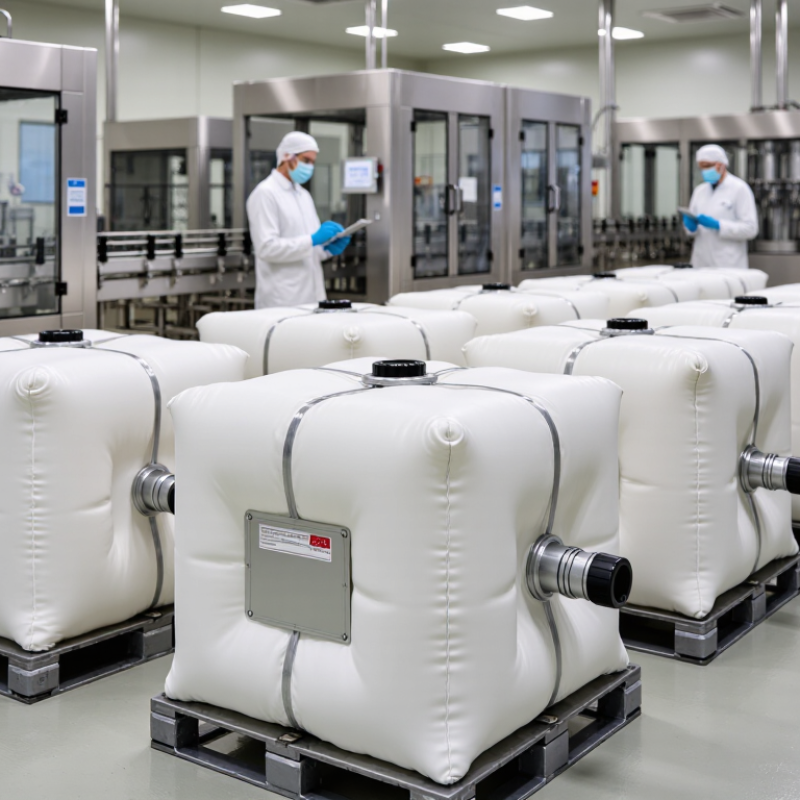
Selecting an Oem Fibc For Pharmaceutical Supplier requires more than comparing prices, production capacity, or attractive product photographs. Global pharmaceutical buyers need packaging that supports product protection, batch traceability, and controlled handling from filling to final delivery. A suitable supplier should demonstrate documented quality systems, material control, validated cleaning procedures, and consistent liner performance.
Dr. Susan E. M. Selke, a recognized packaging specialist, offers a useful reminder: “Good packaging protects the product, the patient, and the process.” That principle matters when flexible intermediate bulk containers carry powders, excipients, or sensitive pharmaceutical ingredients. Buyers should examine fabric strength, electrostatic control, discharge design, moisture barriers, and compatibility with automated filling lines. Small details matter. A poorly fitted liner can create dust, leakage, or cleaning concerns.
This guide reviews leading OEM FIBC pharmaceutical suppliers serving international markets. It considers technical experience, manufacturing transparency, customization ability, quality documentation, and after-sales support. Reliable suppliers should explain how they manage raw materials, inspections, sampling, and corrective actions. They should also provide practical evidence, not only broad claims.
No supplier is flawless. Even a well-established manufacturer may show gaps in communication, validation records, or regional support. That point deserves honest attention. Buyers should request samples, audit key processes, and confirm specifications before approving large orders. A strong partnership grows through measurable performance, clear communication, and responsible risk review. This introduction sets the basis for comparing suppliers that can meet demanding pharmaceutical packaging expectations without overlooking operational realities.
Pharmaceutical OEM FIBC suppliers provide more than stitched polypropylene bags. They deliver controlled systems for powders, granules, and sensitive excipients. IQVIA’s 2024 Global Use of Medicines report projects global medicine spending will reach about US$2.3 trillion by 2028. That growth increases pressure on safe, scalable bulk handling. Suppliers should support this demand with documented material selection, clean manufacturing, and batch-level traceability.
A capable supplier can provide pharmaceutical-grade fabric, certified liners, grounding options, and antistatic designs. They should also offer load testing, drop testing, seal inspection, and extractables documentation. For sterile or high-purity applications, controlled environments and validated cleaning procedures matter. EU GMP Annex 1 places strong emphasis on contamination control, so a clean certificate alone is not enough. Buyers need evidence linking production conditions to actual risk controls.
Documentation should include specifications, change-control records, certificates of analysis, and retained samples. The World Health Organization estimates that one in ten medical products in low- and middle-income countries may be substandard or falsified. Packaging cannot solve every supply-chain weakness, but weak traceability can worsen it. Experienced OEM teams should review filling equipment, discharge height, humidity, and operator handling before production. Some buyers still choose the lowest quotation. That decision may overlook liner compatibility or difficult powder flow, and those failures can appear only after delivery.
How to Define Pharmaceutical-Grade FIBC Requirements
Pharmaceutical-grade FIBC is not a universal legal classification. Buyers must define measurable controls for each application. Start with the powder, filling method, discharge system, and contact duration. Specify virgin resin, liner construction, seam design, and permitted additives. USP <665> offers useful guidance for plastic components used in pharmaceutical manufacturing, especially extractables and leachables assessment. A certificate alone is not enough.
Mechanical performance needs equal attention. ISO 21898 provides testing principles for flexible intermediate bulk containers. For a 1,000-kilogram safe working load, a 5:1 safety factor requires testing against 5,000 kilograms. Confirm lifting-loop strength, drop resistance, stacking limits, and electrostatic behavior. Static control may require Type C or Type D construction, depending on the powder and environment. Small details matter.
Cleanliness should be written as a release specification, not a vague promise. Define bioburden limits, visible-particle inspection, packaging-room controls, and sampling plans. The ISPE Good Practice Guide on packaging emphasizes risk-based qualification and traceability. Request lot-level test records, resin declarations, liner inspection data, and change-notification procedures. A 2024 pharmaceutical packaging outlook from Smithers also identifies contamination control and traceability as continuing priorities. I would still challenge every “pharma-grade” claim. A spotless bag can hide an unsuitable liner, weak seam, or incomplete validation.
| Requirement Area | Pharmaceutical-Grade Benchmark | Recommended Technical Data | Verification Documents or Tests | Importance for Global Buyers |
|---|---|---|---|---|
| Intended Product Classification | FIBC should be specified for non-dangerous solid pharmaceutical ingredients, excipients, intermediates, or finished powders unless a separate hazardous-goods design is required. | Define product name, powder characteristics, bulk density, moisture sensitivity, oxygen sensitivity, filling temperature, and maximum storage period. | Product risk assessment, material compatibility review, and written technical specification. | Prevents the use of a general-purpose bulk bag where a higher level of contamination, static, or moisture control is required. |
| Applicable FIBC Standard | Design and performance should be aligned with ISO 21898 for flexible intermediate bulk containers used with non-dangerous goods. | Specify bag type, construction, lifting arrangement, discharge system, filling system, and rated capacity. | Design drawings, product specification, batch inspection records, and applicable performance test reports. | Creates a consistent technical baseline for purchasing, qualification, and incoming inspection across international markets. |
| Safe Working Load | Common pharmaceutical FIBC capacities are approximately 500–2,000 kg, depending on construction and handling equipment. | Declare the exact Safe Working Load, bag factor, number of lifting cycles, and whether the container is intended for single-trip or reusable service. | Load-bearing test, top-lift test, seam-strength test, and documented safety-factor calculation. | Ensures safe lifting, transport, and storage while avoiding overloading of the bag or warehouse equipment. |
| Safety Factor | Safety factors of 5:1 or 6:1 are commonly specified for FIBC construction; the final value depends on reuse and handling conditions. | 5:1 for defined single-trip applications or 6:1 where repeated handling or additional safety margin is required. | Third-party or in-house tensile, top-lift, and cyclic-lift testing supported by a controlled test method. | Allows buyers to match bag construction with the actual handling cycle instead of relying only on nominal capacity. |
| Fabric and Coating | Use woven polypropylene fabric with a documented resin specification; coated or uncoated construction should be selected according to powder leakage and moisture requirements. | Record fabric basis weight, denier, tensile strength, elongation, coating type, coating weight, and permeability requirements. | Raw-material certificates, fabric inspection, tensile testing, visual inspection, and coating-weight verification. | Controls mechanical strength, dust retention, product loss, and resistance to humidity during international transportation. |
| Inner Liner | Use a compatible polyethylene liner when enhanced containment, moisture protection, or low-product-retention performance is required. | Specify liner resin, thickness, dimensions, fit, sealing method, anti-static properties, and whether the liner is removable or integrated. | Material certificate, thickness measurement, leak test, seal-strength test, and compatibility assessment with the packed product. | Reduces contamination and powder leakage risks and supports more reliable discharge of fine pharmaceutical powders. |
| Clean Manufacturing | Production should take place in a controlled environment with documented cleaning, personnel hygiene, pest control, and foreign-matter prevention procedures. | Define room classification or cleanliness target, gowning rules, cleaning frequency, environmental monitoring, and packaging controls. | Site audit, cleaning records, environmental-monitoring records, hygiene procedures, and foreign-material control logs. | Pharmaceutical buyers need evidence that the bag is manufactured under controlled conditions rather than only visually clean at dispatch. |
| Bioburden and Microbiological Control | Microbiological limits should be established according to the drug product, manufacturing process, and quality-risk assessment. | Define sampling plan, alert and action limits, test frequency, handling of nonconforming results, and laboratory responsibility. | Validated or qualified microbiological methods, routine test reports, trend analysis, and corrective-action records. | Supports contamination-control strategies for sensitive pharmaceutical materials without automatically implying sterility. |
| Sterility Requirement | FIBC should not be described as sterile unless a validated sterilization process, sterile packaging system, and release procedure are provided. | For aseptic applications, specify sterilization method, sterility assurance level, packaging integrity, and validated shelf life. | Sterilization validation, dose or cycle records, sterility testing where applicable, packaging-integrity testing, and release certification. | Prevents misleading claims and ensures that sterile-use requirements are treated separately from ordinary pharmaceutical-grade cleanliness. |
| Electrostatic Control | Static-control construction should be selected according to powder explosibility, solvent exposure, filling equipment, and grounding procedures. | Specify Type A, B, C, or D FIBC classification where applicable; define grounding resistance, conductive yarn arrangement, and operating procedure. | Surface-resistance or continuity testing, grounding verification, electrostatic-control documentation, and process risk assessment. | Reduces ignition and electrostatic-discharge risks when handling combustible dusts or flammable atmospheres. |
| Product Contact Materials | All product-contact materials should be identified, traceable, and suitable for the intended pharmaceutical application. | List polymer type, additives, pigments, sewing thread, liner material, elastomers, and any processing aids. | Material declarations, supplier certificates, extractables or leachables assessment where justified, and change-control records. | Provides traceability and supports regulatory, toxicological, and compatibility evaluations by the finished-product manufacturer. |
| Extractables and Leachables | Assessment should be risk-based and focused on materials that contact the pharmaceutical product or can transfer contaminants. | Define extraction solvents, temperature, contact time, surface-area-to-volume ratio, and analytical limits where testing is required. | Material composition review, laboratory extraction study, analytical report, and toxicological evaluation when applicable. | Helps identify chemical migration risks that may not be detected by routine visual or mechanical inspections. |
| Particulate and Fiber Control | Bag construction should minimize loose fibers, plastic flakes, sewing debris, and other visible or non-visible particulate contamination. | Specify internal cleanliness, trimming requirements, loose-thread limits, inspection lighting, and vacuum or air-cleaning procedure. | Visual inspection records, particle-counting method where required, internal cleanliness inspection, and batch-release checklist. | Important for powders used in products where visible particles or foreign matter can cause batch rejection. |
| Filling and Discharge Design | Inlet and outlet design should match the filling line, discharge equipment, powder flow behavior, and containment requirements. | Define inlet and outlet diameter, spout length, closure type, liner configuration, discharge rate target, and residual-product limit. | Dimensional inspection, fit test on production equipment, discharge trial, and powder-retention assessment. | Improves line efficiency, operator safety, yield, and containment during transfer of pharmaceutical powders. |
| Traceability and Batch Coding | Each production batch should be traceable to raw materials, manufacturing dates, operators, inspection results, and release status. | Use batch number, production date, material lot, inspection status, quantity, and unique packaging identification. | Batch records, certificate of conformity, certificate of analysis where applicable, and controlled label samples. | Enables effective recall, deviation investigation, supplier performance monitoring, and regulatory inspection readiness. |
| Quality Management System | A documented quality system should control purchasing, production, inspection, deviations, complaints, CAPA, training, and change management. | Require documented procedures, internal audits, training records, nonconformance handling, CAPA, and formal change notification. | Quality-system questionnaire, audit report, controlled procedures, CAPA samples, and change-control procedure. | Shows whether the supplier can provide repeatable quality rather than a one-time conforming sample. |
| Packaging and Transport Protection | FIBC should be protected from moisture, dust, UV exposure, compression damage, and accidental opening during storage and shipment. | Specify outer packaging, pallet configuration, wrapping, desiccant use where justified, maximum storage conditions, and transport orientation. | Packaging specification, pallet inspection, transit simulation where necessary, and shipping-condition records. | Maintains cleanliness and mechanical integrity from supplier dispatch through receipt at the pharmaceutical facility. |
| Shelf-Life and Storage | Storage conditions should protect polypropylene fabric, liners, closures, and labels from excessive heat, humidity, sunlight, and contamination. | Define temperature range, relative humidity target, UV exposure limits, stacking restrictions, and recommended storage period. | Stability or aging assessment where needed, storage instructions, warehouse records, and packaging-integrity checks. | Reduces deterioration before use, particularly during long international supply chains and extended warehouse storage. |
| Supplier Qualification | Qualification should combine document review, facility audit, sample approval, process validation, and ongoing performance monitoring. | Assess technical capability, clean-production controls, testing capacity, lead time, minimum order quantity, continuity planning, and complaint response. | Supplier questionnaire, quality agreement, audit report, approved sample, first-article inspection, and periodic review. | Helps global buyers compare OEM suppliers using objective evidence instead of price, catalog claims, or sample appearance alone. |
Purchasing note: The benchmarks above are typical qualification criteria for pharmaceutical-use FIBC. Final specifications should be approved through a documented product-contact, contamination-control, electrostatic, mechanical, and regulatory risk assessment.
Top OEM FIBC Pharmaceutical Suppliers for Global Buyers
Top OEM FIBC pharmaceutical suppliers treat each bag as part of contamination control. The World Health Organization estimates that one in ten medical products in low- and middle-income countries is substandard or falsified. A 2019 regulatory task-force report also linked many drug shortages with manufacturing and quality problems. These findings make packaging qualification a business priority. Reliable suppliers trace resin, fabric, liners, sewing, cleaning, and release testing by batch.
Quality starts with controlled polypropylene and documented supplier approval. FIBCs should meet ISO 21898 requirements for design and performance. Pharmaceutical production needs more than strength testing. Suppliers should control cleanroom assembly, particle levels, bioburden, and liner integrity. They should provide certificates of analysis, extractables data, and validated cleaning records. A smooth inner liner matters. So does a sealed, clearly labeled outer bag.
Regulatory compliance depends on evidence, not attractive paperwork. Suppliers should support audits against applicable GMP expectations, including EU GMP Annex 1 contamination-control principles. They also need documented change control, deviation handling, CAPA, and retained samples. Buyers should review seam-strength results and test the actual production batch. A certificate alone is not proof. Even strong systems can miss a weak seam. That uncomfortable possibility deserves honest review. Supplier scorecards should track complaints, delivery consistency, failed tests, and audit findings over time.
Key regulatory and quality frameworks commonly used when qualifying pharmaceutical FIBC suppliers
Pharmaceutical FIBC qualification typically combines packaging standards, GMP controls, cleanroom requirements, quality-management systems, and extractables or leachables assessments. The years shown refer to the cited edition or publication year of each framework, not to company performance or certification status.
Global buyers evaluating OEM FIBC pharmaceutical suppliers look beyond price and production volume. IQVIA Institute’s Global Use of Medicines 2024 report forecasts worldwide medicine spending will reach about US$2.3 trillion by 2028. That growth increases pressure on bulk packaging suppliers to deliver consistent, validated performance.
A capable OEM should show controlled manufacturing zones, documented cleaning procedures, and full batch traceability. Ask for liner specifications, weld-strength results, particulate-control data, and extractables and leachables testing. ISO 21898 provides a useful reference for flexible intermediate bulk containers, while WHO Technical Report Series guidance supports risk-based quality management. Suppliers should also explain change-control procedures, deviation handling, and how they protect product-contact materials during storage and transport. A glossy audit pack is not proof. Factory evidence matters more.
Tips: Request a recent anonymized batch record, not only a certificate. Compare three production lots for dimensional variation and seal integrity. Check whether sampling plans follow recognized statistical principles. No scorecard is perfect. A weakness may appear in communication, not machinery. Evaluate response time, corrective-action quality, and willingness to disclose limitations. Global buyers should also confirm whether the OEM can support pilot quantities before committing to annual volumes. Small trials often expose practical issues, including liner fitting, discharge behavior, labeling accuracy, and pallet stability.
Selecting the right pharmaceutical FIBC supplier requires more than comparing prices. Review their experience with controlled environments, powder handling, and customized bag designs. Ask for production records, material specifications, and recent batch certificates. A reliable supplier should explain every layer, seam, liner, and discharge feature clearly.
Inspect compliance evidence, not attractive brochures. Check quality systems, cleanroom controls, traceability, and documented change management. Request test data for tensile strength, grounding, microbial control, and extractables where relevant. Confirm that each bag receives a unique batch number. That detail matters.
Audit communication as carefully as manufacturing. Can the supplier answer technical questions without vague promises? Do they provide samples with matching liners, closures, and pallet dimensions? During a practical trial, examine stitching, dust residue, liner fit, and discharge performance. Small defects can disrupt filling operations. No supplier is flawless. An audit file may look complete, yet delivery discipline may remain weak. Discuss complaint handling, corrective actions, lead times, and emergency capacity before signing an agreement. It is also sensible to define inspection points and approval procedures for every design change. Supplier selection should remain evidence-based, but human judgment still matters when details do not align.