Choosing the right packaging vendors is crucial for any business. The quality of your packaging can affect customer perception and overall product success. With numerous options available, it can be overwhelming to make a decision.
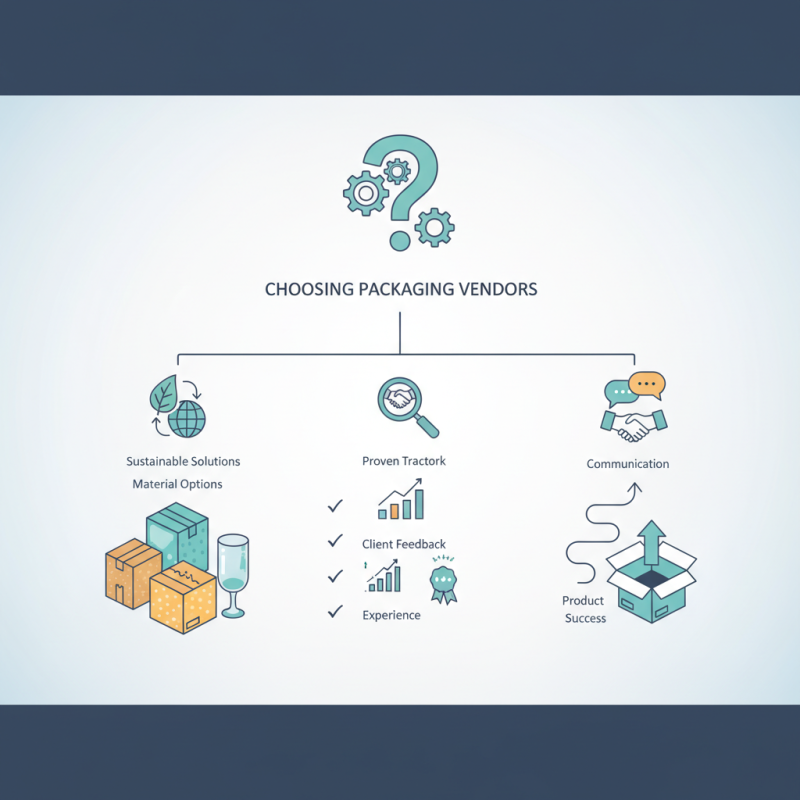
It is essential to assess the capabilities of packaging vendors thoroughly. Look for vendors who provide sustainable solutions. Sustainability is increasingly important for consumers and reflects your brand's values. Consider the material options they offer. High-quality materials can enhance product protection and visibility on shelves.
Not every vendor will meet your specific needs. Some may lack experience with your industry or product type. Look for vendors with a proven track record and positive client feedback. Building a partnership with packaging vendors can take time. Trust and communication will be vital in this process.
Choosing the right packaging vendors can significantly impact your business. Packaging is more than just protection; it enhances brand visibility. The right vendor understands your needs and offers solutions tailored to your products. Quality packaging can attract customers and improve user experience.
When selecting a vendor, consider their production capabilities. Can they meet your volume demands? Are they flexible with design changes? These are crucial questions. Visit their facilities if possible. A firsthand look reveals their operations. Communication also plays a vital role. Open lines lead to better collaboration and problem-solving.
Think about sustainability too. Many consumers prefer eco-friendly packaging. Does the vendor provide sustainable options? This aspect reflects your brand values. However, balancing cost and quality can be challenging. Not every vendor will meet all your criteria perfectly. It requires careful consideration and sometimes tough choices.

Choosing the right packaging vendor is crucial for businesses. Key factors make a significant difference in your decision-making process. According to a recent industry report, 68% of companies consider sustainability when selecting a packaging supplier. This trend indicates an increasing consumer demand for eco-friendly options. Companies must prioritize vendors that offer sustainable materials or practices.
Quality control is another critical factor. A study revealed that 45% of businesses faced issues due to poor packaging quality. It directly impacts product safety and customer satisfaction. Vendors should consistently provide samples for testing. Setting clear expectations for quality standards ensures that your products reach consumers in perfect condition.
Price is important but not the only consideration. Competitive pricing does not always guarantee reliability. A vendor with lower costs may lack essential certifications. It’s vital to assess their history in delivering projects on time. Reliability often outweighs cost in long-term partnerships. Trusting vendors requires a careful evaluation of their past performance. Make sure they align with your business goals.
Evaluating vendor capabilities is crucial when choosing packaging vendors. Start by reviewing their production capacity. Can they handle large orders? Do they have the necessary technology? Understanding their capabilities will help you plan better. Visit their facility to see the equipment and workflow. Witnessing operations firsthand can provide valuable insights.
Product quality should be a top priority. Request samples to assess the materials and finishes. Look closely at durability, as weak packaging can lead to damage. Pay attention to the vendor's quality control processes. Ask about how they manage defects and customer feedback. A vendor that takes quality seriously will often have clear protocols in place.
Consider the level of customer service they offer. Are they responsive to inquiries? Good communication can alleviate many issues. However, be ready to question their claims. Some vendors present themselves well but can't deliver. Reflect on your needs, and don’t hesitate to dig deeper into their reviews and past work.
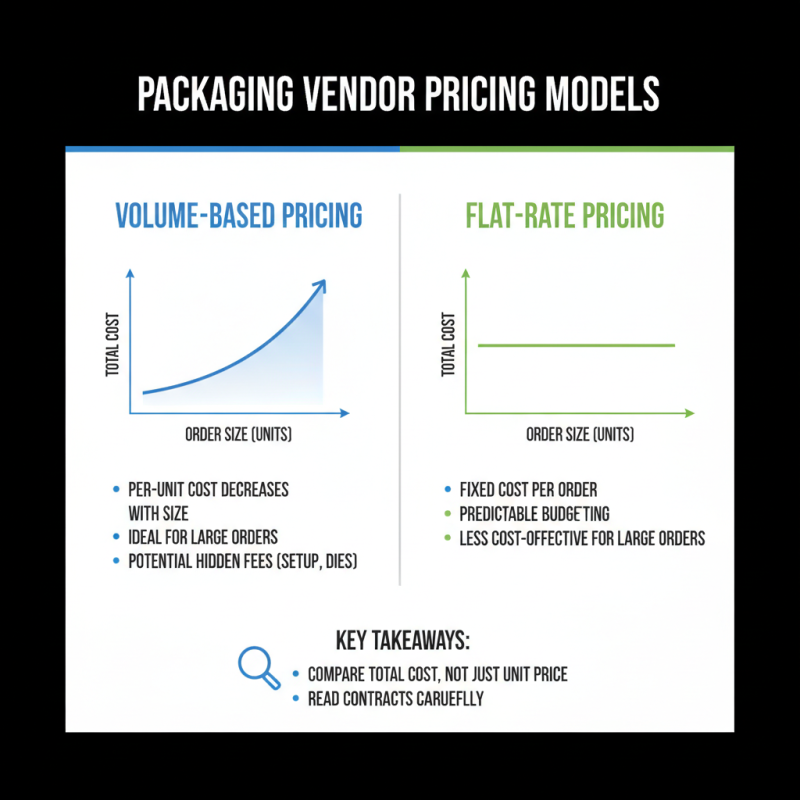
Choosing the right packaging vendor is crucial for any business. One key aspect to consider is their pricing structure. Some vendors charge by volume, while others offer flat rates. Understanding these models helps in budgeting. Compare how costs vary based on order size. Some vendors may seem cheaper at first glance but hide fees in their contracts.
Contract terms play a significant role as well. Look for flexibility in the agreements. Many vendors may lock you into long-term commitments that are hard to exit. You should ask about terms for scalability. What if you need to upsize or downsize your orders? Hidden penalties can strain your budget. Transparency is essential for a healthy partnership, but it’s often lacking.
Don’t overlook the importance of small details. Even minor variations in pricing can ripple through your finances. Take the time to read through contract fine print. You may find conditions that are not immediately clear. Be wary of vendors who seem overly eager to sign. A careful evaluation of pricing structures and contract terms will lead to a more sustainable business relationship.
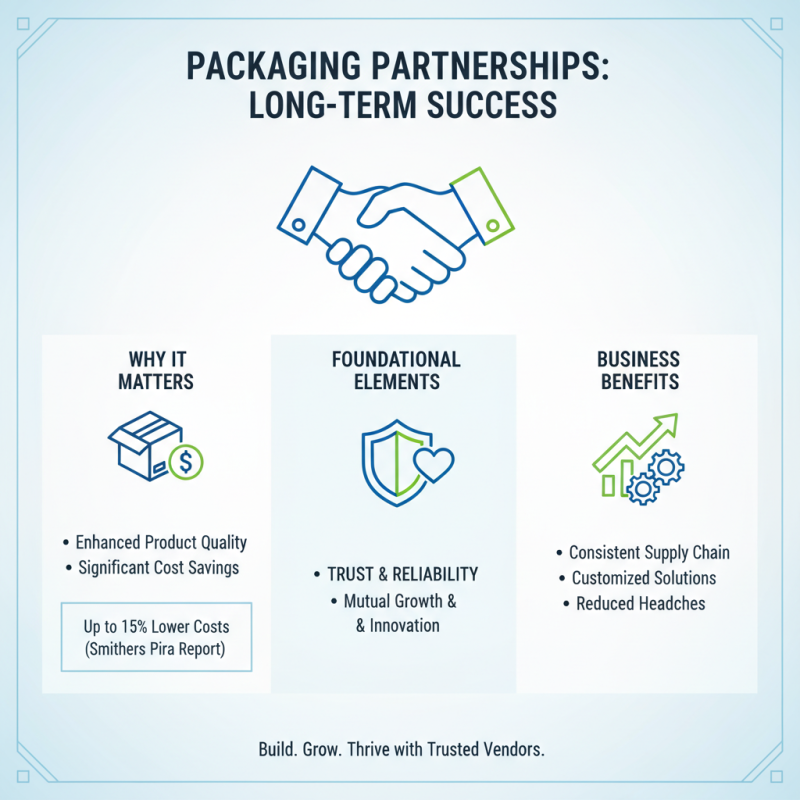
Building a long-term relationship with your packaging vendor is crucial for your business's success. A solid partnership can lead to better quality products and cost savings. According to a report by Smithers Pira, companies that maintain long-term vendor relationships see up to 15% lower costs over time. Trust and reliability become foundational elements in these partnerships.
Communication plays a significant role in nurturing this relationship. Frequent check-ins and open discussions about expectations and challenges can strengthen ties. Reports indicate that 40% of companies struggle with miscommunication in vendor relationships. The more you talk, the better you understand each other’s needs. This understanding can help both parties react to market changes swiftly.
It’s not always smooth sailing. Sometimes, misunderstandings arise, or expectations shift. A study by MHI reveals that 30% of businesses face issues due to delayed shipments or subpar quality. A true partnership allows for candid conversations about these issues. Reflecting on these situations helps both sides learn and improve. The goal is to grow together and keep the partnership thriving.