Top Permeable Bulk Bags for Global Buyers?
Choosing the right Permeable Bulk Bags requires more than comparing prices or viewing attractive product photos. Global buyers need packaging that manages airflow, moisture, handling, and storage conditions. A bag that performs well in a dry warehouse may struggle during humid ocean transport. Small details matter, including fabric weave, liner design, lifting loops, seams, and discharge options.
This guide examines leading bag types for agricultural goods, minerals, chemicals, and other permitted materials. The focus remains practical. We consider safe working load, ventilation, UV resistance, stitching quality, and supplier consistency. We also review documentation, sampling procedures, and production controls. Reliable manufacturers should explain their raw materials, testing methods, and quality records clearly. Independent inspection can add confidence before a large order ships.
No single bag fits every market. That is worth remembering. Regional handling systems, climate, storage time, and applicable packaging standards can change the final choice. Some suppliers describe bags as “breathable” without providing measurable airflow data. That deserves closer review. A better process combines technical specifications with real sample testing. Fill a sample, stack it, move it, and inspect the seams afterward. Even this method has limits, but it reveals practical weaknesses early. This overview aims to help purchasing teams compare Permeable Bulk Bags with greater care, realistic expectations, and stronger supplier accountability.
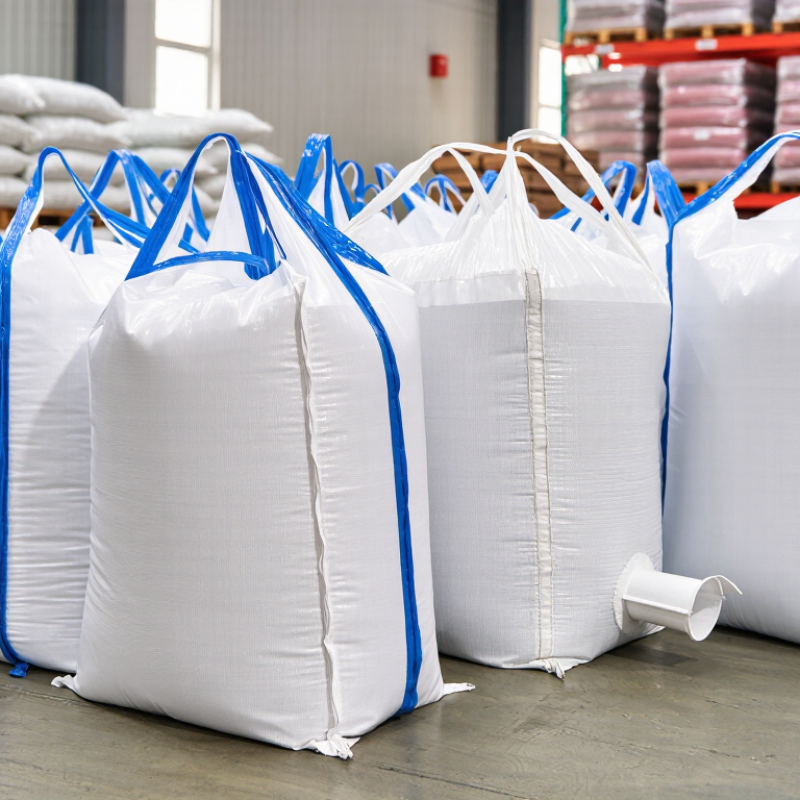
What Are Permeable Bulk Bags and How Do They Work?
Permeable bulk bags are flexible containers made from woven fabric with controlled openings. These openings allow air to move through the bag. They also help limited moisture vapor escape. This design can reduce condensation around dry, breathable materials. However, permeable fabric cannot dry wet goods. That distinction matters. A bag may feel airy but still retain moisture inside its cargo. Common uses include agricultural products, minerals, powders, and other dry materials requiring ventilation.
The bag works through fabric structure, seam design, and filling conditions. Air can pass across the woven walls during storage or transport. Moisture behavior depends on temperature, humidity, product temperature, and stacking pressure. A coated outer layer may reduce exposure, while an inner liner can improve containment. Yet liners can also restrict airflow. I have seen suitable bags perform poorly when filled too hot or stored against damp floors. Performance is never based on fabric alone. Buyers should review safe working load, safety factor, seam strength, lifting loops, and test records.
Tips: Match permeability with the product’s moisture sensitivity. Request fabric specifications and recent load-test evidence. Check bags for loose threads, damaged loops, and uneven seams. Use pallets and keep bags away from rain and standing water. A bag successful in a dry warehouse may fail in a humid port. I would question any supplier promising complete moisture protection without test conditions. Small details often decide whether the cargo arrives stable or compromised.
Key Materials and Construction Features of Permeable Bulk Bags
Permeable bulk bags rely on controlled airflow, strong fibers, and careful stitching. Woven polypropylene is common because it combines low weight with useful tensile strength. Polyethylene may support moisture resistance, but its performance depends on thickness and weave design.
Mesh openings are not decorative. They regulate ventilation around crops, wood pellets, minerals, or other dry materials. A tighter weave limits product loss, while a more open structure improves air movement. Buyers should inspect the fabric under bright light. Uneven openings can signal inconsistent production.
The bag’s seams deserve equal attention. Reinforced corners, folded edges, and secure lifting loops help distribute weight during filling and unloading. Flat bottoms can improve stability on pallets. Some designs include an inner liner, although it may reduce breathability. That trade-off needs practical testing.
Before purchase, confirm the safe working load, filling method, and storage conditions. Ask for test records and inspect sample bags after repeated handling. In warehouse use, dust often gathers along seams and weakens visual inspection. No construction is perfect. A bag that ventilates well may offer less moisture protection, and that compromise should be documented rather than hidden.
Top Permeable Bulk Bags for Global Buyers
Key materials and construction features of permeable bulk bags
Typical technical ranges for breathable FIBCs are shown for comparison. Air permeability varies with weave openness, fabric weight, coating, liner configuration, and test method. Common construction elements include woven polypropylene fabric, reinforced lifting loops, stitched seams, and optional PE liners. Final specifications should be confirmed through supplier test reports.
Main Applications for Permeable Bulk Bags Across Industries
Main Applications for Permeable Bulk Bags Across Industries
Permeable bulk bags support agriculture, landscaping, construction, and mineral handling. Their woven structure allows air movement and controlled drainage around stored materials. In agriculture, growers use them for potatoes, onions, firewood, compost, and other breathable products. Airflow can reduce trapped humidity during short-term storage and transport. However, airflow does not replace proper drying, ventilation, or routine inspection.
Construction teams use permeable bags for sand, gravel, wood chips, and screened soil. Drainage helps prevent standing water after rain, especially on outdoor work sites. Landscape suppliers also use them for mulch, bark, and decorative stone. Field handling shows that reinforced lifting loops and stable stitching matter as much as fabric permeability. A bag may look strong, yet weak seams can fail during forklift movement.
Mining and industrial operations may select these bags for coarse minerals and non-hazardous granular materials. Fine powders require careful testing because particles can escape through the fabric. Food and agricultural processors should also verify cleanliness, liner needs, and moisture control before filling. I would not choose one design for every product. Load weight, particle size, storage duration, UV exposure, and filling equipment can change the result. Small trial shipments often reveal problems that product specifications miss.
How Global Buyers Can Compare Permeable Bulk Bag Options
How Global Buyers Can Compare Permeable Bulk Bag Options
Permeable bulk bags need more than a low purchase price. Global buyers should compare fabric airflow, moisture release, safe working load, and seam strength.
A bag for dry grain may need open ventilation. A bag for powders may need tighter fabric and a protective liner.
ISO 21898 provides a useful framework for testing flexible intermediate bulk containers. It covers lifting, filling, handling, and safety performance. However, laboratory results do not always match humid ports or rough warehouse floors.
FAO’s 2023 Food Loss Index reports that about 13.2% of food is lost globally between post-harvest handling and retail. Packaging cannot solve every loss. It can reduce moisture buildup, caking, and contamination risks when properly selected.
Ask suppliers for air-permeability results, fabric weight, UV resistance, and seam inspection records. Check whether the stated safe working load includes repeated handling. It often does not. That detail deserves closer review.
Tips:
Request a filled-bag trial before placing a large order. Store samples beside the intended commodity for several days. Inspect condensation, stitching, lifting loops, and discharge behavior. Compare total landed cost, including freight, storage, rejected loads, and disposal. A cheaper bag may become expensive after one damaged shipment. Also verify export documentation and test reports from an independent laboratory. Availability can matter as much as specification, especially during seasonal demand.
International Standards for Sourcing and Shipping Bulk Bags
Top Permeable Bulk Bags for Global Buyers?
International Standards for Sourcing and Shipping Bulk Bags
Permeable bulk bags support airflow around agricultural products, minerals, and other dry materials. Their woven fabric can reduce heat buildup during storage. However, permeability does not mean waterproof protection. Buyers should confirm fabric strength, mesh design, coating, and seam construction before ordering.
For international sourcing, request test reports aligned with ISO 21898 requirements for flexible intermediate bulk containers. Check safe working load, safety factor, lifting loops, and filling instructions. A reliable supplier should provide production records, material details, and batch traceability. Inspect sample bags before approving a full shipment. Small stitching defects can become serious failures under heavy loads. I have seen specifications look complete while omitting UV resistance or discharge details. That gap deserves attention.
Tips: Match the bag design to the cargo, climate, and transport route. Confirm whether the material needs food-contact documentation or special cleanliness controls. Ask for dimensional drawings, packed-volume data, and loading photographs. For regulated transport, verify the applicable certification before shipment. Use dry containers, protective liners, and moisture indicators when ocean humidity may affect the cargo. Review marks, labels, packing lists, and destination requirements with a qualified logistics professional. Do not assume one certificate covers every country. Local rules can differ, and even experienced buyers sometimes overlook them.
Top Permeable Bulk Bags for Global Buyers? - International Standards for Sourcing and Shipping Bulk Bags
| Bag Type | Typical Permeability / Construction | Suitable Cargo | Common Working Load Range | Main Sourcing Advantage | Main Limitation |
| Mesh FIBC | Open woven polypropylene mesh; high air exchange and rapid drainage | Firewood, logs, agricultural produce, landscaping materials and other coarse goods | Typically 500–2,000 kg, subject to design testing | Excellent ventilation and visibility of the load | Not suitable for fine powders or products requiring high moisture and dust protection |
| Ventilated FIBC | Woven polypropylene body with engineered ventilation strips, panels or controlled openings | Potatoes, onions, fruit, vegetables, wood products and moisture-sensitive agricultural goods | Typically 500–1,500 kg, depending on panel design and lifting configuration | Balances ventilation with better containment than fully open mesh | Ventilation performance varies significantly with fabric, opening ratio and liner design |
| Leno or Raschel Bag | Knitted or leno-style polypropylene structure with large, stable apertures | Root vegetables, firewood, shells, stones and other ventilated bulk products | Commonly 250–1,500 kg, depending on size and lifting design | Good airflow, fast visual inspection and efficient manual filling | Large openings can allow product loss, contamination or pest entry |
| Perforated Woven FIBC | Woven polypropylene fabric with specified perforation pattern and opening area | Granular agricultural materials and bulk goods requiring moderate airflow | Typically 500–2,000 kg, subject to seam and lifting tests | More controlled permeability than open mesh designs | Perforation can reduce containment and must be matched to particle size |
| Ventilated FIBC with Liner | Breathable outer fabric combined with a removable or integrated polyethylene liner | Products needing airflow with improved protection from dust, leakage or external moisture | Typically 500–2,000 kg, depending on liner and bag construction | Flexible balance between ventilation and product containment | The liner may reduce airflow and add cost, weight and handling steps |
International Sourcing and Compliance Checklist
| Control Area | Recommended Requirement | Verification Point for Buyers | Shipping or Risk Consideration |
| FIBC design standard | Use ISO 21898 as the principal reference for the design and testing of flexible intermediate bulk containers | Request a technical specification, test report and stated safe working load | A standard reference does not replace product-specific testing or destination-country requirements |
| Safe Working Load (SWL) | Specify the exact SWL in kilograms together with the intended lifting method | Check that body, seams, lifting loops, discharge spout and closure are tested as a complete system | Never exceed the marked SWL; lifting equipment and warehouse practices must also be rated appropriately |
| Safety factor | Select the safety factor required by the handling cycle, reuse policy and applicable specification | Confirm whether the bag is designed for single-trip, standard reuse or repeated reuse | Reuse requires inspection, cleaning and documented controls; a higher safety factor alone does not make a bag reusable |
| UN certification | Use a valid UN-tested and marked FIBC only when transporting applicable dangerous goods | Match the UN design type, packing group, product and transport mode to the shipment documentation | UN certification is not automatically required for ordinary non-dangerous cargo and does not cover every regulatory obligation |
| Permeability specification | Define mesh size, opening ratio, air permeability or ventilation-panel layout rather than using only the word “breathable” | Approve a production sample using the actual cargo or a representative particle-size test | Excessive openings may cause spillage, while insufficient airflow may increase condensation and product deterioration |
| Material and additives | Specify virgin or recycled polypropylene, UV stabilization, antistatic properties and any food-contact requirement | Request material declarations and migration or conformity documentation where relevant | Outdoor storage, combustible products and food applications require different material controls |
| Dimensions and capacity | State external dimensions, filling height, discharge dimensions and nominal volume in litres or cubic metres | Confirm filled-bag dimensions, not only flat dimensions, for pallet and container planning | Bulk density determines the actual payload; volume alone cannot establish the safe filling weight |
| Moisture and storage | Define whether the bag is intended for covered, outdoor, dry or temperature-controlled storage | Review UV exposure limits, liner performance and recommended stacking conditions | Permeable fabric is not waterproof; container condensation and rain exposure can affect cargo quality |
| Marking and documents | Include SWL, handling instructions, batch identification and any required regulatory marks | Check that the physical label matches the purchase order, test report and commercial documents | Incomplete or inconsistent documents can delay customs clearance or cargo acceptance |
Note: Capacity and construction ranges shown above are common procurement ranges rather than universal limits. Final specifications should be confirmed through product-specific testing, cargo characteristics, handling equipment and destination-country regulations.
