The 2026 Top Clamshell Boxes for Wholesale Buyers guide examines packaging choices beyond attractive shelf presentation. It focuses on measurable performance, including material clarity, hinge strength, sealing consistency, product visibility, and shipping durability. A box may look polished under showroom lights yet crack during a cold warehouse transfer. That detail matters.
Packaging strategist Lisa McTigue Pierce describes packaging as “a brand’s most tangible touchpoint.” Her observation applies strongly to clamshell boxes, where customers handle the package before judging the product. Wholesale buyers must examine every practical contact point. Can the box stand upright on a retail peg? Does the closure remain secure after repeated handling? Will the plastic protect small accessories from dust, moisture, and scuffing?
This guide compares common formats, including hinged clamshells, two-piece designs, and custom retail packs. It also considers recycled-content options, clear labeling areas, tooling costs, minimum order quantities, and carton efficiency. A strong supplier should provide samples, dimensional drawings, seal tests, and realistic production timelines. Verifiable documentation matters more than attractive promises.
Still, no ranking is flawless. Product weight, storage conditions, and retail display rules can change the best choice. A cheaper unit price may hide expensive inserts, wasted carton space, or high defect rates. Buyers should test samples before approving mass production. Small failures become costly at wholesale volume.
The following selections are designed for practical comparison. They emphasize protection, presentation, consistency, and responsible material decisions. Good packaging is not merely clear plastic. It is a carefully tested sales and logistics tool.
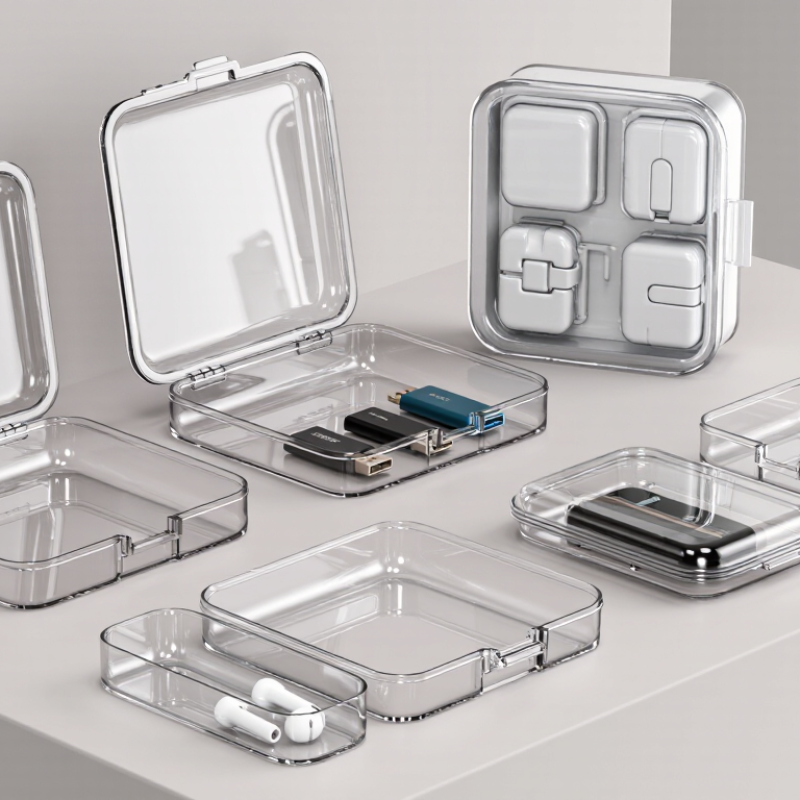
Clamshell boxes are rigid containers with a hinged lid that opens like a shell. They usually use clear plastic, molded fiber, or paperboard. The attached lid keeps the package together during handling. Many designs include a snap closure, hanging tab, or flat display surface.
Retailers use clamshell boxes for small electronics, craft supplies, hardware, cosmetics, and selected food products. A clear front lets shoppers inspect the item without opening the package. The closed shape also helps reduce dust, scratches, and accidental spills. For wholesale buyers, the box must match the product closely. A loose fit can cause movement. A tight fit can damage delicate edges.
Measure the product length, width, height, and any fragile parts before requesting samples. Check the hinge after repeated opening. It should flex without whitening, cracking, or separating. Test stacked cartons too. Weak corners often appear during warehouse handling, not during a showroom inspection. That difference matters.
Material choice requires care. Clear plastic offers strong visibility, but disposal expectations vary by market. Molded fiber gives a softer appearance, though it may resist moisture less effectively. Ask suppliers about material composition, closure strength, printing quality, and production tolerances. Food-related packaging may also require region-specific contact documentation. A first sample may look excellent and still fail under transport pressure. Small trial orders can reveal that problem early.
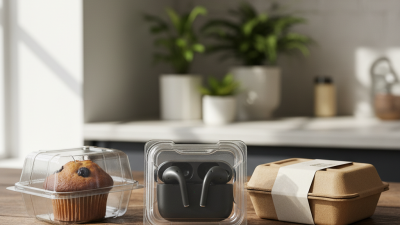
Top clamshell boxes combine product visibility, secure closure, and efficient shelf presentation. Clear walls let buyers inspect color, size, and surface quality without opening the package. That matters for produce, small hardware, stationery, and many retail items. A firm hinge should open smoothly but resist accidental movement during transport. The closure also needs a clear click. Weak locks create costly returns.
Material performance deserves close attention. Many wholesale buyers now request recyclable PET or recycled-content options, but claims should be supported by supplier documentation. Thickness must match the product’s weight and shape. A thin box may crack near the hinge. A heavy box may waste material and increase freight costs. Ventilation holes can reduce moisture buildup, though poor placement may expose the product or weaken the structure. Small details matter.
In packaging trials, stacked cartons often reveal problems that a single sample hides. Check corner crushing, lid alignment, barcode readability, and opening force. Test boxes after temperature changes and vibration. Samples can look excellent. They can still fail in bulk production. Ask for dimensional tolerances, closure testing, and inspection records before placing a large order. Custom inserts, hanging holes, and heat-seal compatibility add value, but each feature may increase tooling time or cost. No package is perfect. A careful buyer measures the trade-offs.
2026 Top Clamshell Boxes for Wholesale Buyers
Materials, Sizes, and Designs for Wholesale Buyers
Material choice affects protection, appearance, stacking, and recycling options. Clear PET offers strong visibility and a crisp retail presentation. Recycled PET can support sustainability goals, but its clarity may vary between production batches. PP handles moderate heat better and remains flexible during transport. For sensitive products, request material specifications and product-contact documentation before placing a large order.
Size should follow the product, not the other way around. Measure length, width, height, and the space needed for inserts. A box that is too tight can crush corners. An oversized box may allow movement and increase shipping costs. Small clamshells suit accessories, samples, and compact components. Larger formats work for produce, craft items, or bundled products. Fit matters. Ask for pre-production samples.
Design details influence handling speed. Hinged lids with secure closures reduce accidental opening, while ventilation holes may help products that need airflow. Hang tabs support peg displays, and molded compartments prevent scratching. Some buyers prefer minimal plastic and a simple silhouette. Others need printed sleeves, labels, or custom cavities. In my experience, attractive designs sometimes complicate packing lines. That trade-off deserves testing. Confirm nesting efficiency, seal consistency, and carton strength during a real trial, not only from drawings. A small defect rate can become expensive across thousands of units.
| Material | Typical Thickness | Appearance | Key Performance | Common Product Uses | Typical Size Range | Design and Closure Options | Wholesale Buying Considerations |
|---|---|---|---|---|---|---|---|
| Clear PET | 0.30–0.80 mm | High transparency with a glossy surface | Good impact resistance, dimensional stability, and moisture protection | Small electronics, hardware, stationery, toys, accessories, and retail components | Small: 60 × 40 × 15 mm Medium: 150 × 100 × 35 mm Large: up to approximately 300 × 220 × 80 mm |
Heat-sealed, snap-lock, hang-tab, euro-slot, and hinged-lid formats | Suitable for product visibility; confirm recycling instructions and local PET acceptance before making sustainability claims |
| rPET | 0.35–0.80 mm | Clear to slightly hazy, depending on recycled content and processing | Similar general stiffness to PET, with recycled-content positioning | Retail accessories, personal-care items, small tools, and promotional products | Approximately 70 × 50 × 20 mm to 250 × 180 × 70 mm | Snap-lock, hinged, heat-sealed, and printed paperboard-sleeve combinations | Request the percentage of post-consumer recycled content, certificate documentation, and color tolerance requirements |
| Clear PVC | 0.25–0.70 mm | Very clear with a soft, flexible feel | Good clarity and foldability; generally less preferred where a PVC-free specification is required | Low-cost display packaging, craft items, novelty products, and lightweight accessories | Approximately 60 × 40 × 15 mm to 220 × 160 × 60 mm | Heat-sealed, folded, glued, snap-lock, and hanging formats | Check destination-market restrictions, retailer policies, and disposal requirements before ordering |
| PP | 0.35–0.90 mm | Clear, translucent, or opaque; usually less glass-like than PET | Good chemical resistance, flex fatigue resistance, and hinge performance | Reusable food-related accessories, household items, cosmetics, and small consumer goods | Approximately 80 × 50 × 20 mm to 300 × 220 × 90 mm | Living hinges, snap closures, tamper-evident tabs, hang-tabs, and stackable bases | Useful when repeated opening is needed; verify food-contact compliance if the package touches food |
| RPET/PP Blend | 0.40–0.90 mm | Clear or translucent, depending on formulation and recycled content | Balances rigidity, flexibility, and recycled-content requirements | General retail packaging, household accessories, and promotional kits | Approximately 100 × 70 × 25 mm to 280 × 200 × 80 mm | Snap-lock, hinged lid, insert tray, sleeve, and printed label applications | Confirm the exact resin composition because recycling compatibility varies by market and facility |
| Paperboard with Clear PET Window | Paperboard: 300–500 gsm Window: 0.20–0.40 mm |
Printed paperboard exterior with a transparent product window | Good printability and shelf presentation; less resistant to moisture than an all-plastic clamshell | Gifts, stationery sets, cosmetics, craft kits, and bundled products | Approximately 120 × 80 × 30 mm to 300 × 220 × 80 mm | Auto-lock base, tuck flap, hanging tab, die-cut window, and internal paperboard insert | Specify window material, adhesive type, board grade, coating, and whether the window must be removed for recycling |
| Recycled Paperboard with Clear Window | 300–500 gsm board 0.20–0.40 mm window |
Natural or white printed board with a clear viewing area | Good stiffness-to-weight ratio and strong branding surface; moisture resistance depends on coating | Eco-positioned gift sets, accessories, toys, and small household products | Approximately 130 × 90 × 35 mm to 280 × 200 × 75 mm | Water-based coating, paperboard insert, tuck closure, hang-tab, and sleeve construction | Ask for recycled-fiber percentage, responsible-sourcing documentation, and coating details |
| Standard Hinged Clamshell | Usually 0.30–0.80 mm plastic | Two connected halves with a visible hinge line | Fast product access and convenient presentation; closure security depends on the locking geometry | Tools, accessories, electronics, toys, and small hardware | Small to large formats, commonly 70–300 mm in length | Living hinge, snap buttons, locking tabs, tamper-evident tear strip, and hang-hole | Confirm hinge-cycle expectations, closure force, stacking behavior, and product retention during transport |
| Heat-Sealed Clamshell | Usually 0.30–0.70 mm plastic | Fully sealed perimeter with a clean retail presentation | Strong tamper evidence and product protection; opening normally requires scissors or a tear feature | Blister-style retail products, tools, electronics, and accessories | Approximately 80 × 50 × 20 mm to 250 × 180 × 70 mm | Perimeter flange, tear-open strip, hang-tab, card insert, and printed backing card | Budget for sealing tooling and validate seal strength, opening method, and package safety requirements |
| Snap-Lock Clamshell | Usually 0.35–0.90 mm plastic | Reusable two-piece pack with molded locking points | Convenient opening and closing without a separate adhesive or sealing operation | Stationery, cosmetics, small tools, craft items, and replacement parts | Approximately 70 × 50 × 20 mm to 280 × 200 × 80 mm | Button lock, edge lock, double lock, hang-tab, and internal molded cavity | Test closure retention, opening force, child-safety considerations, and compatibility with automated packing |
| Custom Molded Insert Clamshell | Usually 0.40–1.00 mm plastic | Product-shaped cavity with a fitted top and bottom section | Improved product positioning, vibration control, and visual presentation | Delicate accessories, precision parts, premium tools, and multi-piece kits | Designed around the product; practical outer sizes commonly range from 80–300 mm | Multiple cavities, finger access points, locking tabs, labels, and printed sleeves | Requires product drawings or samples; account for mold cost, cavity tolerances, and tooling lead time |
| Stackable Clamshell | Usually 0.50–1.00 mm plastic | Reinforced base with nesting or stacking features | Improved warehouse storage and transport stability compared with non-stackable shapes | Hardware, household goods, components, and high-volume retail items | Approximately 100 × 70 × 30 mm to 300 × 220 × 90 mm | Recessed lid, locating ribs, flat base, snap closure, and pallet-friendly outer profile | Run compression, drop, vibration, and pallet-stack tests using the final packed product |
Specifications are typical commercial ranges rather than universal standards. Final dimensions, material thickness, recycled content, closure performance, and regulatory suitability should be confirmed with production samples and test reports.
2026 Top Clamshell Boxes for Wholesale Buyers
How to Evaluate Clamshell Box Quality and Supplier Reliability
A reliable clamshell box should feel rigid before testing begins. Inspect the hinge, locking tabs, edges, and transparent panels. Uneven seams often reveal weak tooling or poor temperature control. Request samples from several production batches, not one polished sample. Check closure strength after repeated opening. Also test stacking, vibration, moisture, and drop resistance. A box that looks clear may still crack under warehouse pressure. That detail is easy to miss.
Supplier reliability needs measurable evidence. Ask for material specifications, inspection records, production capacity, and corrective-action reports. Confirm whether the supplier can repeat color, dimensions, and locking performance across large orders. The OECD Global Plastics Outlook reported that only 9% of plastic waste was recycled globally in 2019. This makes material traceability increasingly important. Request recycled-content evidence when applicable. Packaging claims should be documented, not simply printed on a sales sheet. I have found that vague answers usually create expensive delays later.
Tips: Keep a sample approval board. Record measurements, photos, and test results. Ask for lead-time data from the previous six months. Check how the supplier handles rejected units. A dependable partner explains failures clearly. Perfection is unlikely. Consistent improvement matters more. Also review packaging waste during transit, since damaged cartons can hide otherwise good box quality.
Wholesale buyers comparing top clamshell boxes in 2026 should examine total cost, not only the quoted unit price. A low price may exclude tooling, inserts, inspection, or freight. Ask for a complete quotation with material grade, box dimensions, wall thickness, closure style, and carton quantity.
Request a physical sample. It can reveal weak hinges, cloudy surfaces, or difficult opening points.
Customization often begins with size and shape. Standard molds usually reduce setup costs and shorten production time. Custom molds offer better product fit, but tooling charges and approval delays require careful planning.
Share product measurements, weight, stacking needs, and retail display requirements with the supplier. Printed labels, embossing, color matching, and tamper-evident features may affect both price and lead time.
Keep the artwork simple. Fine details can lose clarity on curved plastic.
Ordering decisions should include a realistic sales forecast, inspection plan, and delivery buffer. Many suppliers require a minimum order quantity, so compare the storage cost before accepting a large run.
Confirm sample approval in writing, including acceptable color variation and closure performance. A third-party inspection can check dimensions, sealing, scratches, and carton strength before shipment.
Do not rely on photographs alone. They can hide flaws.
My purchasing experience suggests that the cheapest offer is rarely the safest choice. Yet premium customization is not automatically better. Forecasts can be wrong, especially for seasonal products.
A smaller trial order may protect cash flow, even with a higher unit cost. Recheck every assumption before production.